 7 Min Read
 03/23/2026
Roof storm damage can happen suddenly and often goes unnoticed until it leads to bigger problems like leaks or structural issues. After a major storm, taking the right steps quickly can help protect your home and prevent costly repairs or even a full roof replacement. Homeowners in Land O’ Lakes and throughout the Tampa Bay area know how quickly severe weather can impact a roof, and having a clear plan makes all the difference.
In this guide, we will walk through the key steps to take after a storm impacts your roof.
- Immediate safety actions: What to check first after the storm passes
- Damage identification: Common signs of roof damage
- Documentation tips: Preparing for insurance claims
- Next steps: When to call a roofing contractor
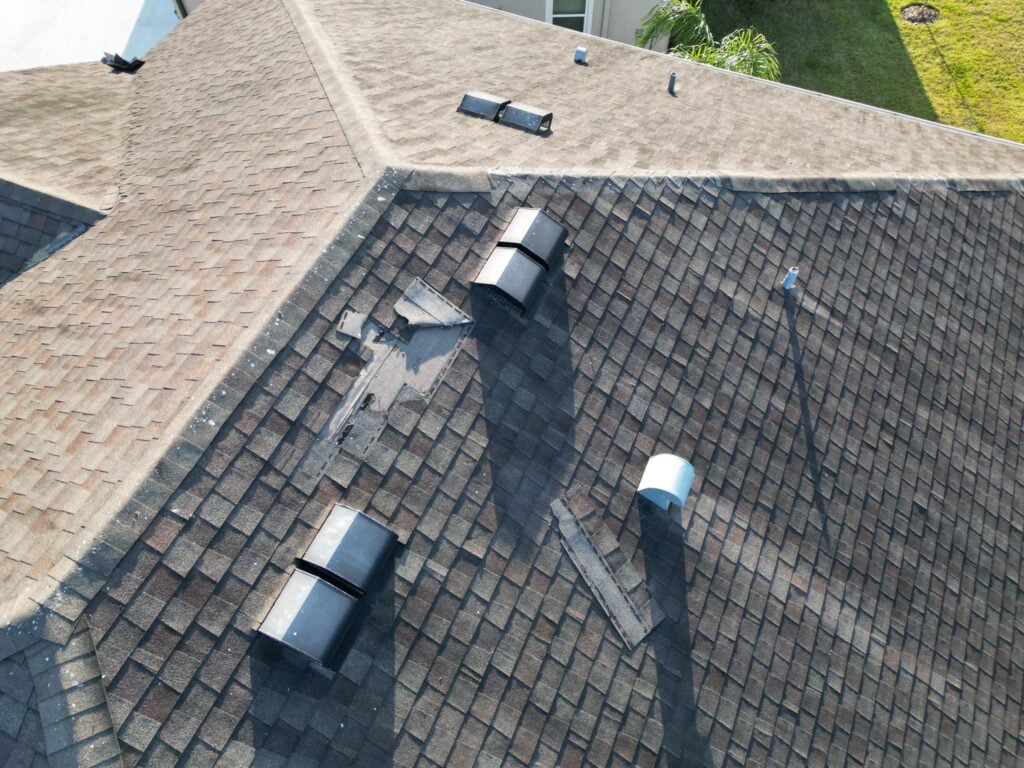
Why Storm Damage Should Never Be Ignored
Severe weather can impact your roof in ways that are not always visible from the ground. High winds, heavy rain, and flying debris can weaken roofing materials and create openings where water can enter. Even minor roof storm damage can lead to long term issues if not addressed quickly.
After a storm, your roof may have compromised areas that allow moisture to seep in and damage underlying materials like the roof deck. In some climates, storms followed by freezing temperatures can also contribute to ice dams, which trap water along the roof edge. Acting early can help prevent interior damage and extend the life of your roofing system.
- Hidden leaks: Water can enter through small openings and spread over time
- Structural concerns: Prolonged exposure can weaken the roof deck and supports
- Mold risk: Moisture buildup may lead to mold growth
- Higher repair costs: Delayed action often leads to more extensive roof repairs
7 Steps to Follow After Severe Weather
Taking a structured approach after a storm helps homeowners stay safe and avoid missing important details. These steps can guide you through the process from initial inspection to professional evaluation.
1. Check for Immediate Safety Hazards
Your safety should always come first after a storm. Before inspecting your roof, look for any obvious hazards around your property.
- Downed power lines: Stay clear and contact local authorities
- Fallen debris: Branches or materials that may pose a risk
- Unstable structures: Loose roofing or exterior elements
2. Inspect Your Roof From the Ground
After ensuring the area is safe, visually inspect your roof from the ground. Avoid climbing onto the roof, especially if it may be damaged.
- Missing shingles: Gaps in roofing material after high winds
- Debris on roof: Branches or objects that may have caused impact damage
- Visible sagging: Signs of structural stress
3. Check Gutters and Surrounding Areas
Your gutters and yard can provide clues about roof storm damage. Materials often collect in these areas after severe weather.
- Shingle granules: May appear in gutters after impact
- Loose flashing: Metal pieces found near the home
- Clogged drainage: Debris buildup affecting water flow
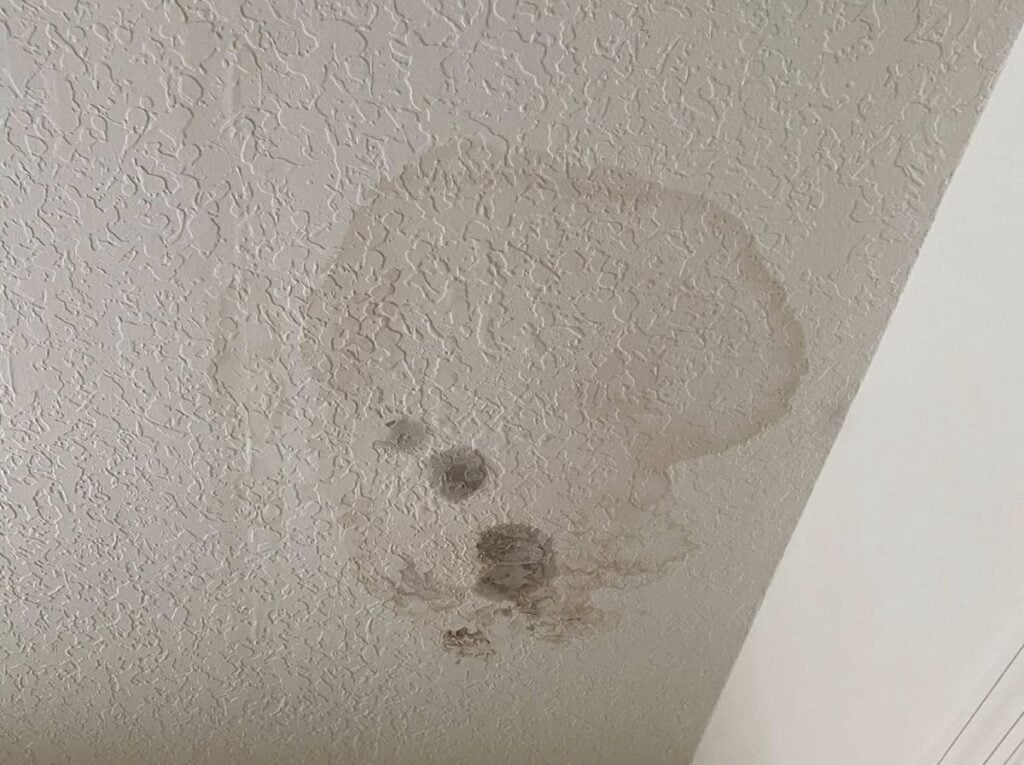
4. Look for Interior Signs of Damage
Damage is not always visible outside. Checking the inside of your home can help identify hidden issues.
- Water stains: On ceilings or walls
- Dripping water: Especially during or after rain
- Musty odors: May indicate moisture buildup
5. Document Everything
Proper documentation is important if you need to file an insurance claim. Taking clear photos and notes helps support your case.
- Photo evidence: Capture all visible damage
- Detailed notes: Record what you observe and when
- Date tracking: Helps establish a timeline for claims
6. Make Temporary Repairs if Needed
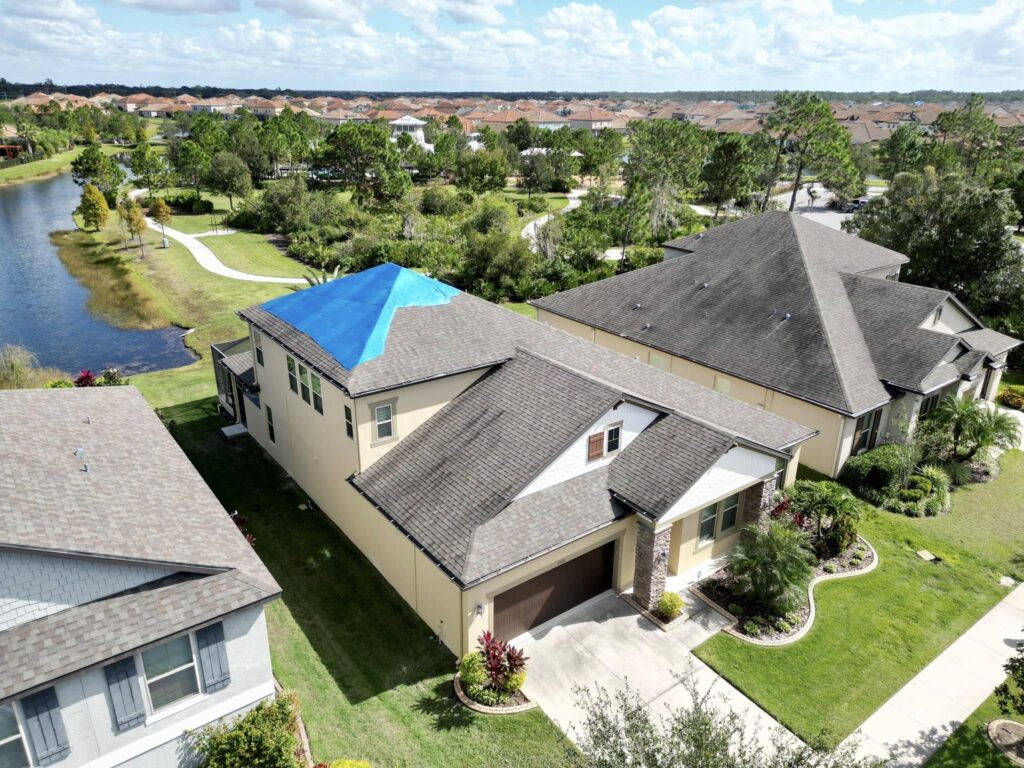
If your roof has visible openings or leaks, temporary measures can help prevent further damage until repairs are completed.
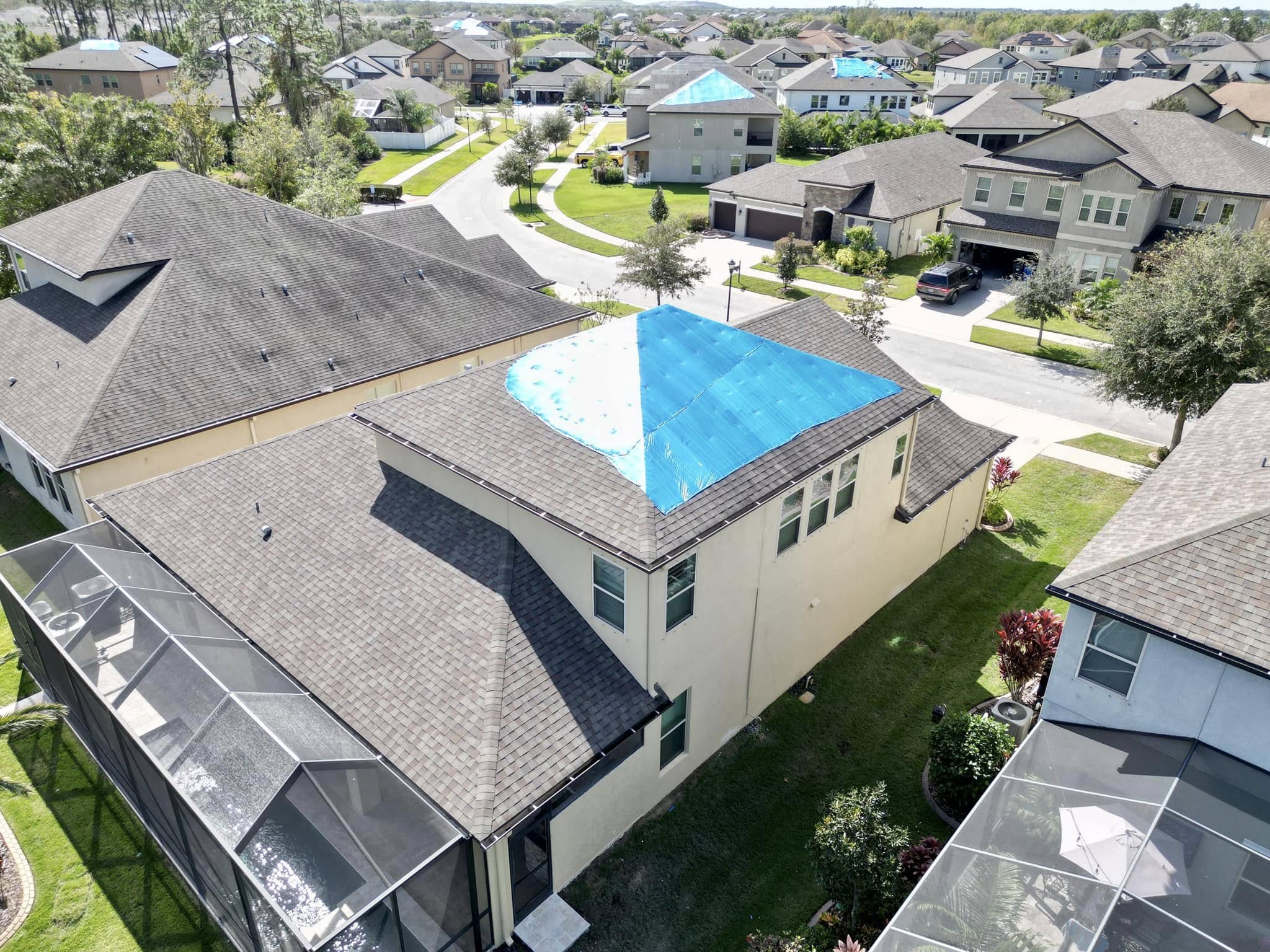
- Tarp coverage: Protects exposed areas
- Contain leaks: Use buckets or towels indoors
- Prevent water spread: Limit additional interior damage
7. Schedule a Professional Inspection
A professional inspection is the best way to fully assess storm damage. A professional roofing contractor can identify issues that are not visible from the ground and recommend the right next steps.
- Detailed evaluation: Checks all roofing components, including metal roofing if installed
- Repair recommendations: Provides next steps based on findings
- Insurance support: Helps with documentation if needed
We’re proud to serve home and business owners in Carrollwood, Tampa, and nearby communities with roof storm damage guidance and more.
Common Roof Repair Materials After Storm Damage
Different types of damage require different repair materials. Understanding what may be used during roof repairs can help homeowners feel more informed during the process.
- Replacement shingles: Used to fix areas with missing shingles or damaged sections
- Roofing nails and fasteners: Secure materials back in place after wind damage
- Flashing materials: Repair or replace metal around vents, chimneys, and valleys
- Sealants and adhesives: Help prevent water intrusion in vulnerable areas
- Underlayment: Adds an extra layer of protection beneath shingles. Our guide on roof underlayment explains the different types and why this layer is critical for long-term roof performance.
- Patching materials: Temporary or permanent solutions for small damaged sections
Roof Inspection Guidelines After a Storm
Knowing how to approach a roof inspection safely can help homeowners avoid risks while still identifying potential problems. These guidelines help ensure a thorough and cautious review.
- Stay off the roof: Avoid climbing up, especially after severe weather
- Use binoculars if needed: Get a closer look from the ground safely
- Check multiple angles: Walk around your home to view all sides
- Inspect attic spaces: Look for moisture or light coming through
- Watch for new debris: Identify anything that was not there before
- Call a roofing contractor: Schedule a professional inspection for a complete assessment
Common Types of Roof Storm Damage
Storms can affect roofs in different ways depending on wind speed, debris, and rainfall intensity. Understanding these types of roof damage can help homeowners recognize potential issues.
Wind Damage
High winds can lift or remove shingles, often leading to missing shingles and exposing the roof to water intrusion. Even partially lifted shingles can weaken over time.
Hail Damage
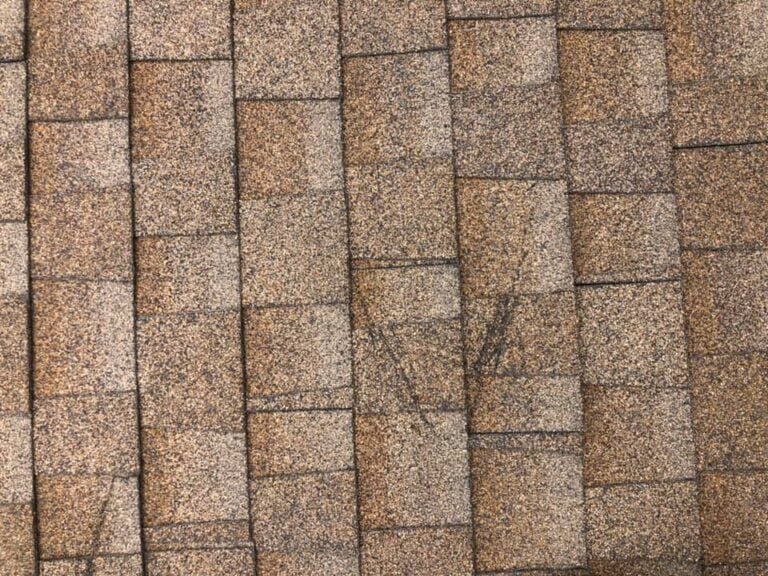
Hail can create dents, cracks, or bruising on roofing materials. This type of damage may not be obvious but can shorten the lifespan of the roof.
Water Damage
Heavy rain can exploit weak points in the roof and lead to leaks. Prolonged moisture exposure can damage insulation and interior structures.
When to Consider Repairs or Replacement
After a major storm, the extent of the damage will determine whether repairs or a full roof replacement is needed. Minor issues can often be repaired, while widespread damage may require a more comprehensive solution. For a closer look at the repair process, our guide on storm damage roof repair walks through what to expect and how contractors approach restoration work.
Minor Damage
Small areas of damage or limited leaks can often be handled with targeted roof repairs without replacing the entire system.
- Isolated missing shingles: Damage limited to small sections of the roof
- Minor leaks: Small areas of moisture that have not spread extensively
- Light flashing damage: Issues around vents or edges that can be resealed
- No structural impact: Roof deck and underlying materials remain intact
Major Damage
Extensive roof damage across large sections of the roof or damage to the roof deck may require a full replacement for long term protection.
- Widespread shingle loss: Large portions of roofing material missing or damaged
- Roof deck damage: Moisture has reached and weakened underlying structure
- Multiple leak points: Water intrusion occurring in several areas
- Storm impact damage: Debris or high winds have caused significant structural stress
Protect Your Home With Shingle Masters
Roof storm damage can be stressful, but taking the right steps helps protect your home and prevent further issues. Acting quickly and working with a professional roofing contractor ensures your roof is properly evaluated and repaired.
Shingle Masters helps homeowners assess storm damage, identify repair needs, and determine whether repairs or a roof replacement is the best path forward. Whether your home needs minor roof repairs or a more detailed inspection, our team is ready to help you protect your property.
Contact Shingle Masters today to schedule a professional inspection and get the guidance you need after severe weather. We proudly serve homeowners in Bradenton and across the Tampa Bay area.