 6 Min Read
 02/16/2026
If you’re wondering how to measure a roof for shingles, you’re already taking the right first step toward a successful roofing project. Accurate measurements help you order the correct amount of materials, avoid delays, and stay within budget. Whether you are planning a DIY project or simply want to understand the process before hiring a contractor, knowing how roof measurements work gives you confidence and clarity.
Before you get started, here is what you should focus on:
- Accurate surface area calculations: Knowing the total square footage prevents overbuying or running short, which can impact both costs and timing.
- Understanding roof pitch: Steeper roofs require more material than flat measurements suggest, especially in multi-slope homes.
- Factoring in waste: Cutting shingles around valleys and edges adds extra material needs, even on simpler roof structures.
- Safety planning: Measuring safely is just as important as measuring correctly, especially for homes with high or complex roofing elevations.
In storm-prone areas like Land O’ Lakes, FL, and throughout the Tampa Bay region, proper planning matters even more. The right measurements ensure your roof can be installed quickly and securely before the next round of heavy rain or high winds threatens your home.
Why Accurate Roof Measurement Matters
Measuring your roof correctly does more than determine how many shingles to buy. It directly impacts cost, timeline, and long-term performance by setting the foundation for a well-executed project.
We’re proud to serve home and business owners in Sarasota, FL, and nearby communities with roof measurements, replacements, and more. Whether you’re preparing for a full roof shingle replacement or just updating materials, we’re here to help.
Tools You Will Need Before Measuring
Before climbing onto your roof, gather the proper tools to ensure safe and accurate measurements. Preparation saves time and reduces risk while giving you a better sense of the total job scope.
- Tape measure or laser measure: Provides accurate length and width dimensions across various roof sections.
- Ladder with stabilizer: Keeps your ladder steady and prevents gutter damage or sliding accidents.
- Calculator: Helps convert square footage into roofing squares and double-check material needs.
- Notebook or mobile device: Allows you to record each section clearly and reference it later when ordering supplies.
- Safety gear: Non slip shoes, gloves, and fall protection are highly recommended for steep or multi-level roofs.
If you are uncomfortable climbing onto your roof, measuring from the ground and calculating pitch separately is safer. Professional contractors also use satellite measurement tools for additional precision and quicker turnarounds.
Key Roof Terms You Should Understand
Before calculating anything, it helps to understand a few basic roofing terms. These definitions will make the process much clearer as you measure and estimate materials.
- Roofing square: Equal to 100 square feet of roof area and used to price materials consistently.
- Pitch: The steepness of the roof, expressed as a ratio such as 4 in 12, which heavily affects surface area.
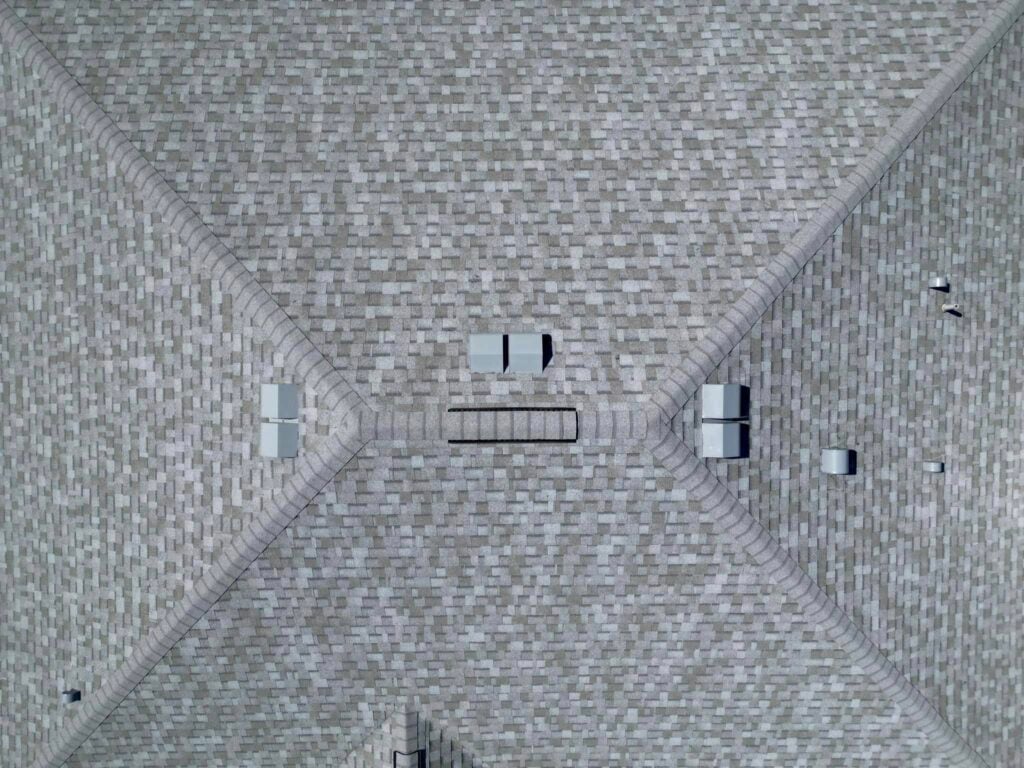
- Ridge: The horizontal peak where two roof slopes meet, often requiring ridge cap shingles.
- Valley: The internal angle where two roof sections connect, requiring specialized flashing and shingle cuts.
- Eaves: The lower edge of the roof that extends beyond the wall, impacting drip edge installation.
Each of these components affects how many shingles you need and how much waste to expect. Getting familiar with them helps you avoid missteps later.
7 Steps to Measure a Roof for Shingles
Once you’re ready and have all your tools, follow this process to calculate your roof’s surface area accurately. These steps work for most standard residential roofs, including simple gables and moderate hips.
- Measure the home footprint: Measure the length and width of your house at ground level and multiply them to get the base square footage. Don’t forget to include attached garages or porches with roofing.
- Calculate each roof plane separately: If your roof has multiple sections, measure each one individually to keep your math clean.
- Multiply length by width: For each roof section, calculate its surface area and double-check for accuracy.
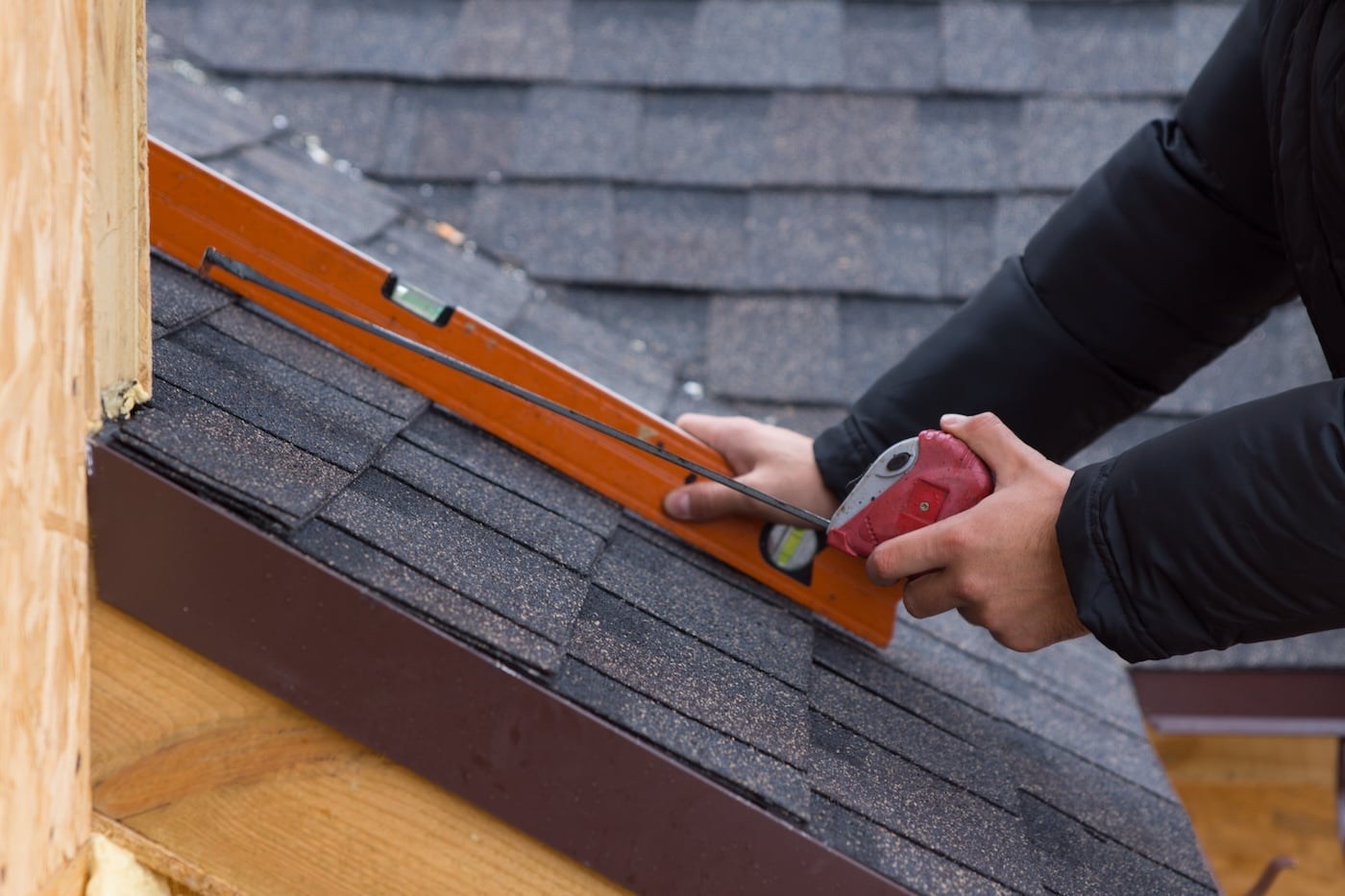
- Determine roof pitch: Use a level and tape measure to calculate rise over run, and write it down for later.
- Apply the pitch multiplier: Multiply your base square footage by the appropriate pitch factor to account for slope and extra surface area.
- Add waste factor: Add 10% to 15% for standard gable roofs and up to 20% for complex designs with valleys and hips.
- Convert to roofing squares: Divide total square footage by 100 to determine how many squares of shingles you need to order.
For example, if your total adjusted roof area is 2,500 square feet, you would need 25 roofing squares. Adding a 10% waste factor brings that total to about 28 squares, which helps prevent mid-project shortages.
Roof Pitch Multiplier Reference Table
Your roof’s slope significantly changes your total surface area. Use the pitch multiplier below to calculate it correctly and avoid costly underestimation.
| Roof Pitch | Multiplier |
| 4 in 12 | 1.05 |
| 6 in 12 | 1.12 |
| 8 in 12 | 1.20 |
| 10 in 12 | 1.30 |
| 12 in 12 | 1.42 |
Common Mistakes to Avoid
Measuring mistakes can lead to excess costs, delays, or improper material use. Keep an eye out for these common issues as you work through the process.
- Ignoring roof pitch: Flat measurements underestimate material needs and can leave you short.
- Forgetting waste allowance: Complex roofs require extra shingles to account for cuts and overlaps.
- Skipping valleys and ridges: These areas require additional materials like ridge caps and flashing.
- Rounding down: Always round up when purchasing shingles to avoid shortages on installation day.
Taking a little extra time during measurement can save hours and additional expense later. Double-check your work, especially for larger or multi-plane roofs. It’s also worth understanding what goes beneath the shingles—our guide on roof underlayment explains the protective layers that affect both material needs and long-term performance.
Trust Shingle Masters for Accurate Roof Measurements in Sarasota
Measuring your roof correctly is the foundation of any successful roofing project. While it is possible to do it yourself, professional measurements ensure accuracy, safety, and peace of mind for even the most complex roof layouts.
If you are planning a roofing project and want a professional evaluation, contact Shingle Masters today for a thorough roof inspection and accurate shingle estimate. We proudly serve homeowners in Carrollwood, Bradenton, and throughout the Tampa Bay area. Let us handle the measurements so you can focus on what matters most.