 9 Min Read
 10/08/2026
A flat roof pitch isn’t actually perfectly flat. Even roofs that look level from the ground need enough slope to move rainwater toward drains, scuppers, or gutters. Without that positive drainage, water can collect in low areas and place unnecessary stress on the roofing system.
For Florida properties, proper slope becomes especially important during periods of heavy rainfall. Roof design, drainage locations, structural conditions, and roofing material all influence how effectively water leaves the surface. If you’re evaluating a low-slope roof for your property, explore commercial roofing solutions designed for Florida conditions.
- Typical minimum: Many low-slope roof systems are designed around a minimum slope of about 1/4 inch per foot.
- Drainage matters: Roof pitch needs to direct water toward functioning drains, scuppers, or gutters.
- Material matters: Different flat roof systems have specific slope and installation requirements.
- Existing roofs: Settlement or structural movement can create low spots even when the original roof was properly sloped.
Is a Flat Roof Actually Flat?
Despite the name, a properly designed flat roof has some degree of slope. The pitch may be difficult to notice because it’s far less dramatic than the slope of typical sloped roofs.
That slight incline serves an important purpose. Rainwater needs a predictable path away from the roof surface. A truly level roof could allow water to remain wherever it lands, increasing the likelihood of ponding and putting additional demands on seams, flashing, and other vulnerable areas of the roofing system.
6 Things to Know About Flat Roof Pitch
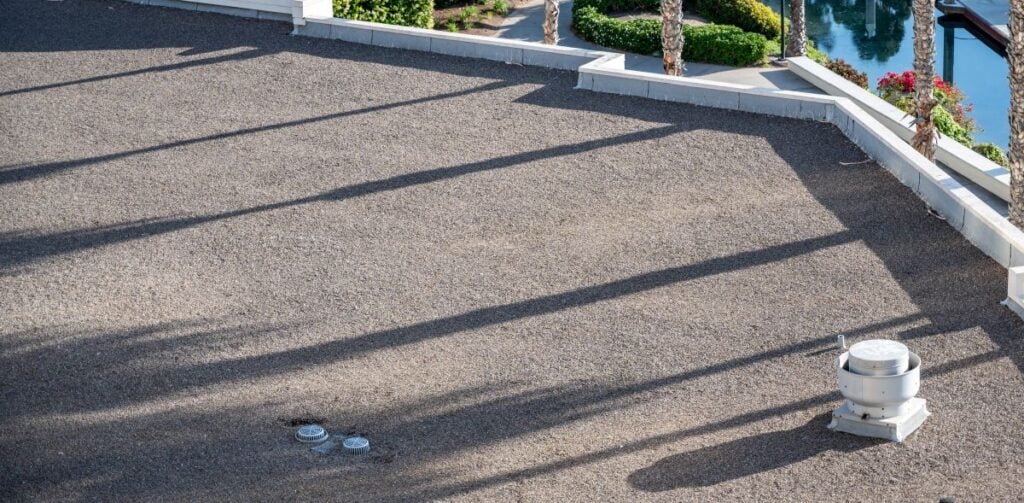
Determining an appropriate roof slope involves more than picking a number. The roofing system, drainage layout, roof deck, materials, and actual condition of the structure all influence whether water moves away as intended.
1. A 1/4-Inch-Per-Foot Minimum Slope Is Common
A commonly used minimum slope for low-slope roofing is 1/4 inch of vertical rise or fall for every 12 inches of horizontal distance, often expressed as a 1/4:12 slope. That means a roof would change elevation by approximately 2.5 inches across a 10-foot horizontal run. The pitch is subtle enough that the roof can still appear flat while providing a path for drainage.
- 1 foot of run: About 1/4 inch of elevation change.
- 10 feet of run: About 2.5 inches of elevation change.
- 20 feet of run: About 5 inches of elevation change.
- Visual appearance: The roof can still look essentially flat from ground level.
2. Pitch and Drainage Have to Work Together
Slope alone doesn’t guarantee that a flat roof will drain correctly. Proper drainage requires water to have somewhere to go once the pitch directs it across the roof surface, so low-slope roofs may use interior drains, perimeter gutters, scuppers through parapet walls, or a combination of drainage methods.
- Interior drains: Water is directed toward drains positioned within the roof area.
- Scuppers: Openings allow water to exit through a parapet or perimeter wall.
- Gutters: Sloped sections can direct water toward perimeter collection systems.
- Crickets: Raised areas can help divert water around equipment or other obstructions.
- Secondary drainage: Overflow provisions provide another route when primary drainage becomes obstructed.
3. Existing Roofs Can Lose Effective Slope
A roof may have been constructed with adequate pitch and still develop drainage problems years later. Structural movement, compressed insulation, previous repairs, roof deck deflection, or changes around drainage points can create low areas where water collects. That’s why the actual drainage performance of an existing roof matters just as much as its original design.
- Low spots: Depressions can allow water to collect instead of reaching a drain.
- Structural movement: Changes in the building can alter the effective roof slope.
- Roof repairs: Added materials can interfere with established drainage paths.
- Drain locations: A drain that’s higher than a surrounding area may leave water behind.
4. Roofing Material Affects Minimum Pitch
Not every roofing material is intended for the same slope. Flat roof systems generally rely on continuous membranes or other materials designed for low pitched roofs, while asphalt shingles depend more heavily on overlapping courses and gravity to shed water.
- TPO roofing: Commonly used on low-slope commercial buildings.
- Modified bitumen roofing: Designed specifically for low-slope applications.
- Asphalt shingles: Generally require more slope than flat-roof membranes.
- Metal roofs: Minimum slope depends on the panel system and manufacturer requirements.
5. Rooftop Equipment Can Affect Drainage
HVAC equipment, curbs, vents, pipes, and solar panel installations can all influence how water moves across a roof. These features need to be positioned and detailed without blocking established drainage paths or creating new areas where water can collect.
- HVAC equipment: Curbs and supports can interrupt the natural flow of water.
- Solar panels: Mounting systems should account for existing drainage paths.
- Roof penetrations: Pipes and vents require proper flashing and placement.
- Maintenance access: Drains and important roof areas should remain accessible for inspection.
6. Tapered Insulation Can Improve Slope
Tapered insulation can be used on some flat roof systems to create or improve pitch without rebuilding the entire roof structure. Different insulation thicknesses are arranged to direct water toward drains, scuppers, or gutters, while crickets and saddles can help move water around obstacles.
- Improved drainage: Tapered sections can direct water away from existing low areas.
- Drain placement: Insulation can help guide water toward established drainage points.
- Crickets and saddles: These features can redirect water around rooftop equipment.
- Existing conditions: Structural problems with the roof deck still need to be addressed separately.
Why Is Flat Roof Pitch So Important?
Pitch helps control where rainwater travels after it reaches the roof. Without adequate slope, moisture can remain on the roof surface longer and increase exposure around seams, flashing, penetrations, and other details.
Florida’s intense rain can make drainage particularly important for commercial buildings. A large roof can receive a substantial volume of water during a storm, so the slope and drainage system need to function together rather than relying on the roofing membrane alone to handle standing water.
What Happens If a Flat Roof Doesn’t Have Enough Pitch?
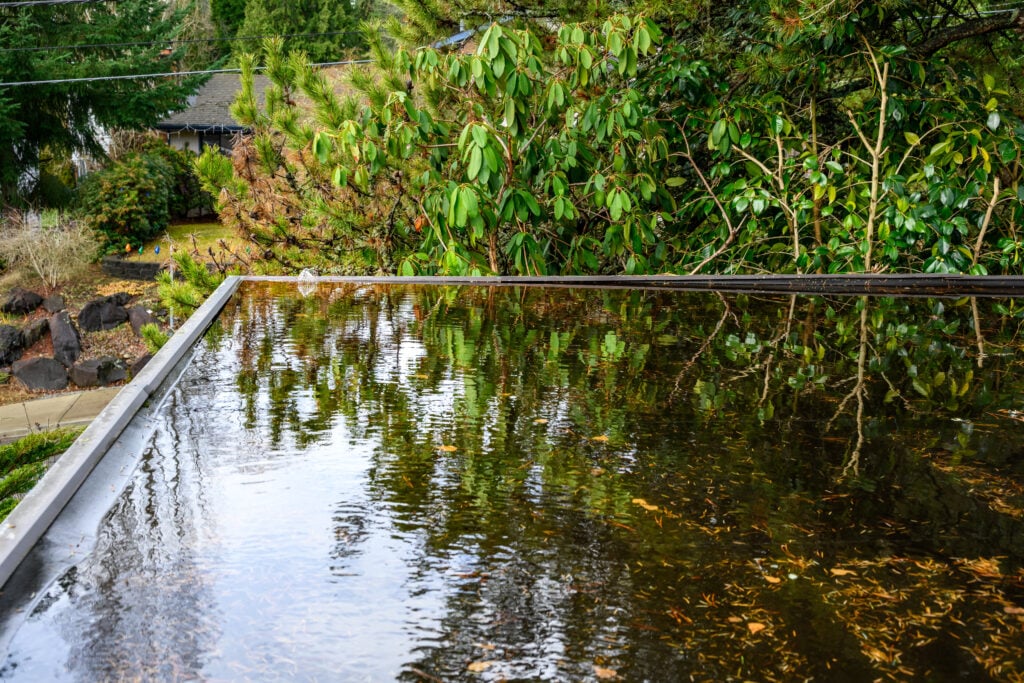
Poor drainage doesn’t always produce an immediate interior leak. Instead, homeowners and property managers may first notice recurring puddles or areas that stay wet significantly longer than the rest of the roof. Persistent ponding can place additional stress on the roofing system and increase the amount of time materials remain exposed to moisture.
- Recurring ponding: Water repeatedly collects in the same locations.
- Staining: Discoloration can show where water regularly sits or drains slowly.
- Debris accumulation: Leaves and dirt often settle in low areas.
- Membrane changes: Some areas may show premature deterioration or blistering.
- Interior moisture: Ceiling stains or damp areas can indicate the roofing system needs attention.
Can You Add Pitch to an Existing Flat Roof?
In some situations, yes. Correcting drainage doesn’t always require rebuilding the entire roof structure. Tapered insulation can create or improve slope on certain low pitched roofs, while crickets and saddles can redirect water around rooftop equipment, walls, solar panels, or other obstructions.
The cause of the drainage problem matters, though. If the roof deck itself is deflecting or damaged, adding tapered insulation may not correct the underlying issue. A roofing professional should determine whether the problem is primarily related to the roof surface, insulation, drainage layout, or structure before recommending a solution.
Which Roofing Materials Work With Low Slopes?
Low-slope roofs require roofing materials designed for that type of application. Traditional asphalt shingles depend heavily on gravity and overlapping courses to shed water, while flat roof systems generally use materials capable of creating a more continuous weather-resistant surface.
- TPO roofing: A single-ply membrane commonly used on commercial buildings.
- Modified bitumen roofing: An asphalt-based membrane designed for low-slope applications.
- Built-up roofing: Multiple layers form a continuous roofing system.
- Metal roofing: Certain metal roofs can work at low pitches when the specific panel system allows it.
The roofing material also needs to work with the building’s drainage design. Manufacturer requirements can establish minimum slopes for specific products, so a material shouldn’t be selected based only on how low the roof appears from the ground.
How Can You Tell If Your Flat Roof Has Enough Slope?
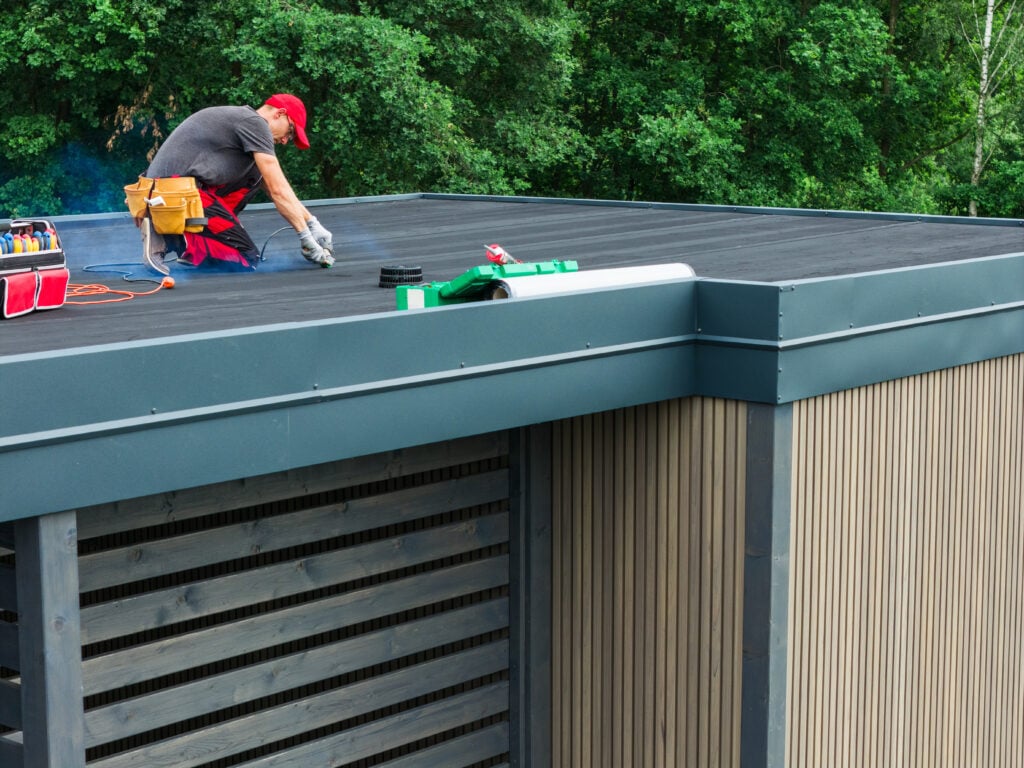
Because the pitch is so subtle, looking at a flat roof from the ground usually won’t tell you whether it has enough slope. How the roof behaves after rainfall can be more revealing. Water should move toward intended drainage points rather than consistently remaining in large low areas.
Some water accumulation can also result from blocked drains rather than inadequate pitch, which is why the complete drainage system needs to be considered. A professional evaluation can examine roof elevations, drains, scuppers, membrane condition, roof deck concerns, and other factors to identify what’s actually preventing proper drainage.
FAQs About Flat Roof Pitch
Flat roof slope may be difficult to see, but even small elevation changes can have a significant effect on how the roofing system manages rainwater.
What is the minimum pitch for a flat roof?
A 1/4:12 slope, or approximately 1/4 inch per foot, is commonly used as a minimum design slope for many low-slope roofing applications. Exact requirements can vary based on the roofing system, building design, manufacturer specifications, and applicable codes.
How much does a flat roof drop over 20 feet?
At a 1/4-inch-per-foot slope, the elevation changes approximately 5 inches over a 20-foot horizontal run.
Can a flat roof have zero pitch?
A roof with no slope provides no intentional direction for rainwater to travel. Low-slope roofs are generally designed with some pitch and a drainage strategy rather than being constructed completely level.
Why does water sit on my flat roof?
Recurring ponding can result from low spots, blocked drains, inadequate slope, structural movement, compressed materials, or drainage points that aren’t positioned effectively. Identifying the cause is important before deciding how to correct it.
Can tapered insulation fix flat roof drainage?
Tapered insulation can be used in some roofing systems to create or improve slope toward drainage points. Whether it’s appropriate depends on the existing roof assembly, structural condition, drainage layout, and planned roofing system.
Get Your Flat Roof Draining Right With Shingle Masters
A flat roof doesn’t need a dramatic slope, but it does need a reliable way to move water. Proper pitch, correctly positioned drainage, compatible roofing materials, and professional installation all work together to protect the building beneath it.
Shingle Masters can evaluate your low-slope roof, identify drainage concerns, and explain whether maintenance, targeted corrections, or a larger roofing solution makes sense. You’ll know our service fee up front, with no hidden costs and no surprise charges, because trust begins with telling you the truth.
Schedule an inspection today with Shingle Masters to get a better understanding of your roof’s drainage, condition, and next steps.