 13 Min Read
 09/03/2026
Flat roof leak causes are often harder to identify than homeowners expect. Unlike a steep roof, a flat or low-slope roofing system depends heavily on its drainage, flashing, and roof membrane to keep water from entering the building. Even a small opening in the roof surface can lead to trapped moisture and interior damage before an obvious ceiling leak appears.
Flat roof leaks are especially important to address on a flat commercial roof, where HVAC equipment, drainage systems, and penetrations can create additional vulnerable areas. If you’re dealing with recurring leaks or drainage problems, Shingle Masters provides low-slope roofing solutions through its commercial roofing services.
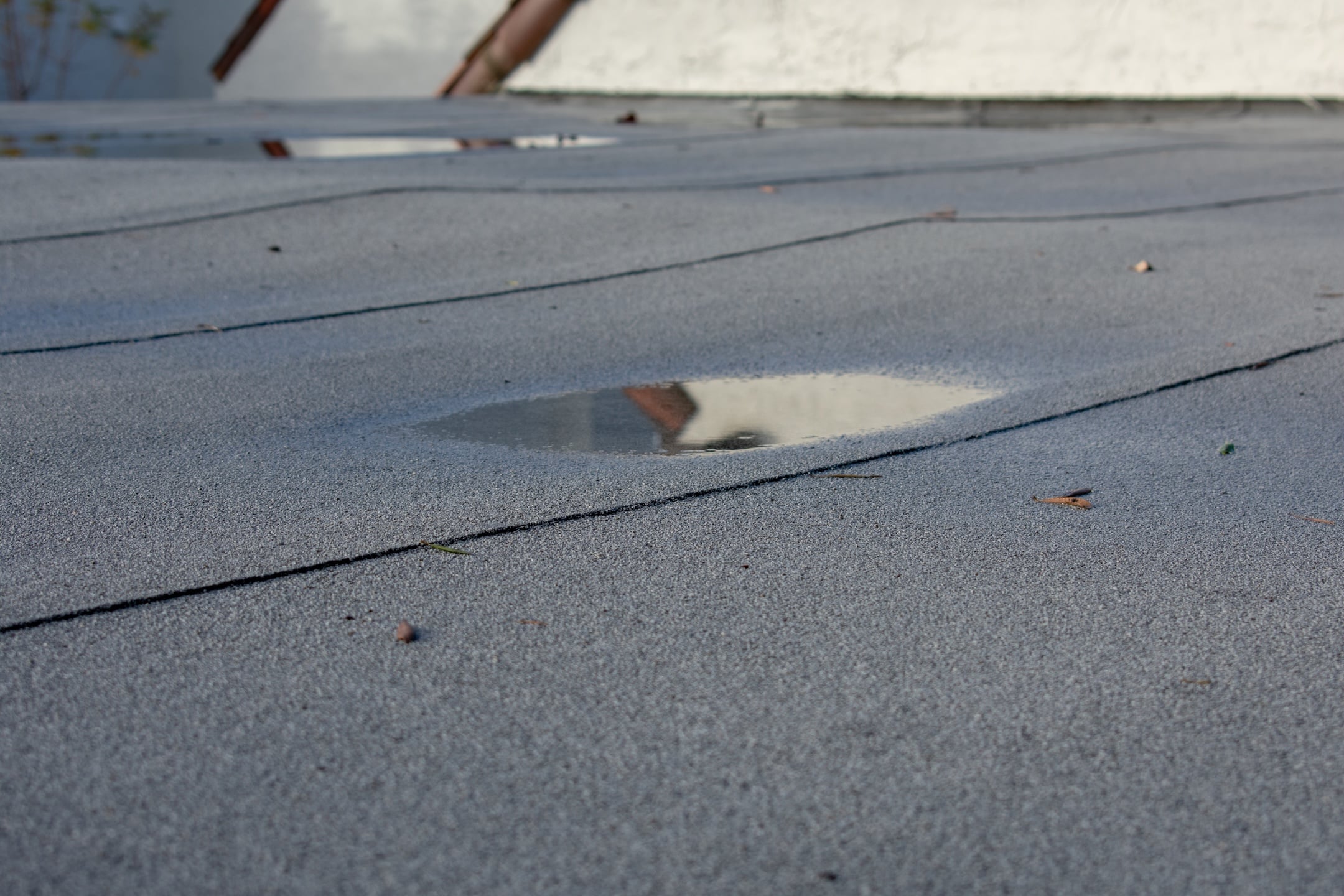
- Standing water: Ponding water can remain over weak seams, damaged flashing, and deteriorated roofing materials, increasing opportunities for water intrusion.
- Roof membrane damage: Tears, punctures, open seams, and deterioration can compromise the waterproof layer protecting the building.
- Drainage problems: Blocked drains and low areas can prevent water from leaving the roof efficiently after heavy Florida rainfall.
- HVAC units: Curbs, flashing, and penetrations surrounding rooftop equipment can become potential entry points for water.
Why Flat Roofs Develop Leaks
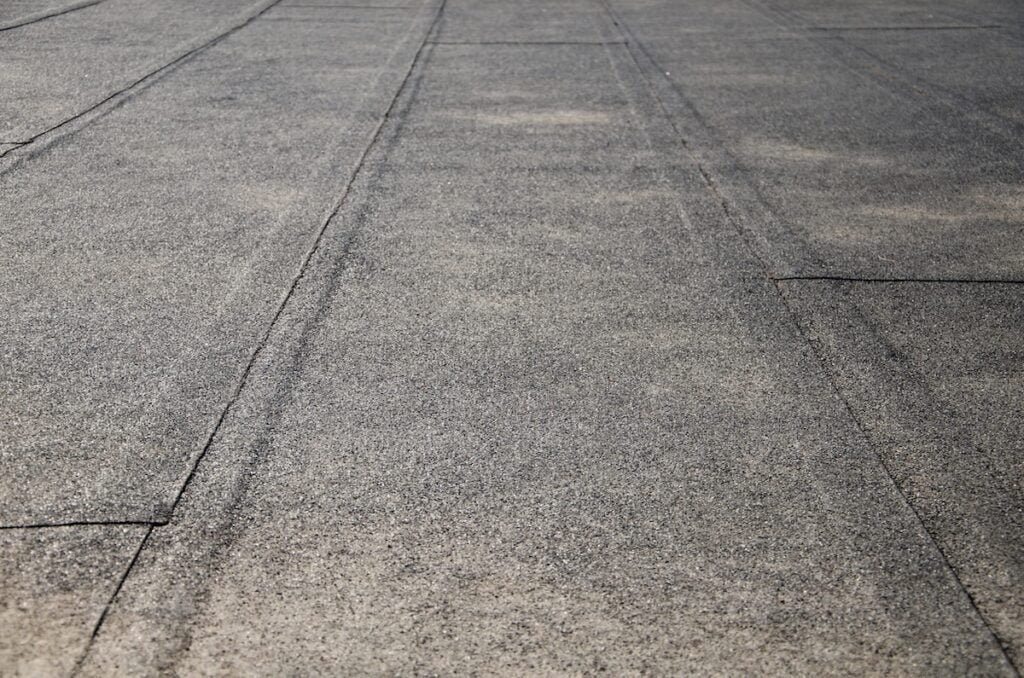
Despite the name, a properly designed flat roof isn’t completely level. The roof system should have enough slope to move rainwater toward drains, scuppers, gutters, or other drainage points. Problems can develop when debris blocks those paths, the roofing material deteriorates, thermal movement affects seams and flashing, or vulnerable areas around penetrations begin to fail.
Flat roof leaks can also be deceptive because the location where water appears inside the building isn’t necessarily directly below the original opening. Once moisture gets beneath the roofing material, it may travel through insulation, decking, or other parts of the assembly before becoming visible indoors.
9 Flat Roof Leak Causes Homeowners Commonly Miss
Some flat roof leak causes are easy to see, while others develop around seams, drainage components, penetrations, and concealed portions of the roof. Understanding these nine common culprits can make it easier to identify problems early and determine whether timely repairs may prevent more extensive damage.
1. Ponding and Standing Water
Standing water that remains on a flat roof instead of draining away is one of the first conditions worth investigating. Persistent ponding can occur because of inadequate drainage, clogged outlets, low spots, or changes in the roof structure, and prolonged exposure can accelerate deterioration of the roofing materials.
- Low spots: Depressions in the roof surface can collect rainwater instead of directing it toward the intended drainage points.
- Membrane deterioration: Constant moisture exposure can accelerate wear and make existing weaknesses in the roof membrane more problematic.
- Added weight: Large amounts of standing water add weight to the roof assembly and shouldn’t be ignored when ponding repeatedly occurs.
- Recurring roof leaks: Water sitting over weak seams, flashing, or punctures has more opportunity to enter the roofing system.
2. Clogged Drains and Scuppers
Leaves, dirt, roofing debris, and other material can obstruct drains and scuppers. When drainage components become clogged, water can back up across the roof surface and collect around seams, flashing, penetrations, and other vulnerable areas.
- Leaves and debris: Organic material can accumulate around drainage openings and restrict normal water flow during heavy rainfall.
- Backed-up water: A blocked drain can cause water to spread into areas that don’t normally remain wet for extended periods.
- Heavy rainfall: Florida storms can place additional demand on a drainage system that’s already partially obstructed.
- Routine maintenance: Keeping drainage paths clear helps the roof shed water as the system was designed to do.
3. Failed Roof Membrane Seams
Many commercial roof types use sheets or sections of membrane that must be joined together to create a continuous waterproof surface. Depending on the system, seams may be adhered, mechanically secured, or heat-welded, and deterioration or separation can eventually create an opening for moisture.
- Separated seams: Even a relatively small opening can create an entry point for rainwater beneath the membrane.
- Wear and tear: Years of sunlight, heat, rain, rooftop activity, and weather exposure can affect roofing materials and seam integrity.
- Installation quality: Incorrectly completed seams may become vulnerable earlier than properly installed connections.
- Hidden moisture: Water entering through a seam can migrate beneath the membrane before an interior leak makes the problem obvious.
4. Damaged Flashing and Parapet Walls
Flashing protects transitions where the roof meets edges, equipment curbs, penetrations, and parapet walls. Because these areas are exposed to weather and movement, damaged or separated flashing can create openings that allow water behind the roofing system.
- Loose flashing: Material that pulls away from a wall, curb, or roof edge can expose a vulnerable gap.
- Deteriorated sealants: Sealants around flashing details can age, crack, and lose their ability to protect transitions effectively.
- Parapet walls: The junction between a flat roof and parapet wall requires careful waterproofing because water can enter at transitions and flashing details.
- Water entry: Once flashing fails, moisture can move behind exterior roofing materials instead of remaining on the surface.
5. HVAC Units and Other Roof Penetrations
Rooftop HVAC units, vents, pipes, conduits, skylights, and drains interrupt the continuous waterproofing layer of a flat roof. Each penetration requires carefully installed flashing and waterproofing, making these locations important areas to examine when tracking down roof leaks.
- HVAC units: Curbs and surrounding flashing can become vulnerable because of weather exposure, movement, or equipment servicing.
- Vent pipes: Flashing, collars, and sealants around pipes can deteriorate and create small openings for water.
- Skylights: Their seams and flashing create multiple transitions that require proper waterproofing.
- Later modifications: New equipment added after the original installation can introduce additional penetrations into the roof system.
6. Membrane Punctures and Surface Damage
A flat roof membrane can be damaged by storm debris, tools, foot traffic, or work performed around rooftop equipment. A puncture doesn’t need to be large to allow moisture into the roofing assembly, and small openings can be particularly difficult to identify without a thorough roof inspection.
- Foot traffic: Repeated walking across unprotected areas can contribute to wear or accidental membrane damage.
- Storm debris: Branches and other sharp objects can strike the roof during severe weather and puncture roofing material.
- Contractor activity: HVAC, electrical, or other rooftop work can accidentally damage the membrane.
- Small openings: Minor punctures may remain unnoticed until moisture has already entered the assembly.
7. Poor Installation
Even high-quality roofing materials can develop problems when poor installation leaves weak seams, improperly flashed penetrations, or inadequate drainage. Correct installation is especially important on flat roofing because water moves away from the surface more slowly than it does on sloped roofs.
- Improper seams: Incorrect bonding, fastening, or welding can leave membrane sections vulnerable to separation.
- Drainage mistakes: A roof that doesn’t move water effectively can experience recurring ponding after Florida’s heavy rains.
- Flashing errors: Poorly detailed walls, curbs, penetrations, and edges can become persistent sources of water entry.
- Premature failure: Installation defects can cause individual roofing components to fail well before the rest of the system.
8. Trapped Moisture, Blisters, and Thermal Expansion
Bubbles or raised areas in a flat roof membrane can indicate air or trapped moisture within the roofing assembly. At the same time, repeated heating and cooling cause roofing materials to expand and contract, and this thermal expansion can place stress on seams, flashing, and other vulnerable connections.
- Trapped moisture: Water beneath the membrane can remain concealed even when most of the roof surface appears intact.
- Blistering: Raised areas may experience additional stress from weather, temperature changes, and rooftop activity.
- Thermal expansion: Repeated material movement can stress seams and transition points over the life of the roof.
- Membrane damage: Blisters that crack or tear can compromise the protective roofing surface and create another potential water-entry point.
9. Normal Wear and Tear
Every roofing system experiences wear and tear as it ages. Florida roofs face intense UV exposure, heat, humidity, rain, and storms, all of which can gradually affect membrane flexibility, seams, flashing, coatings, and previous repairs.
- UV exposure: Continuous sunlight can contribute to the gradual deterioration of exposed roofing materials.
- Cracking: Aging materials may become less flexible and more vulnerable to splits or other openings.
- Older repairs: Previous patches and sealants can deteriorate along with the original roof and eventually require additional attention.
- Widespread deterioration: When problems occur throughout the system, repeated repairs may become less practical than a broader roofing solution.
How Poor Drainage Leads to Flat Roof Leaks
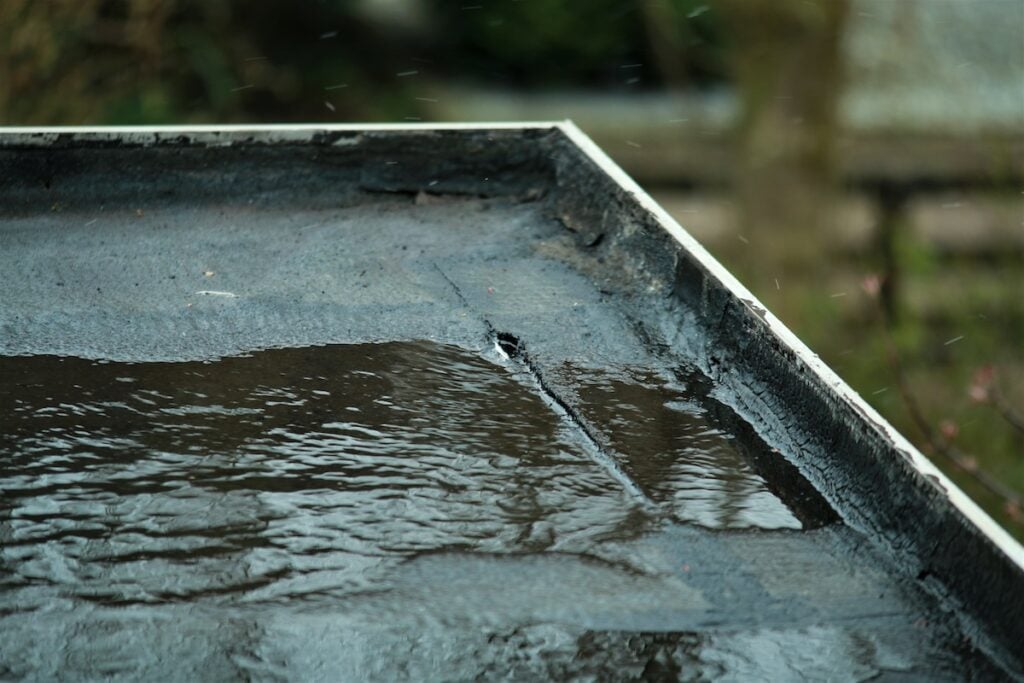
Poor drainage deserves particular attention because it can worsen several other flat roof leak causes simultaneously. A blocked drain, insufficient slope, sagging area, or poorly positioned drainage path can leave water sitting over membrane seams, penetrations, flashing, and previous repairs.
Persistent standing water can accelerate deterioration of the roofing material and place additional weight on the assembly. Unlike sloped roofs, low-slope systems can’t rely on a steep pitch to move rainwater away quickly, making functional drainage particularly important.
- Clogged drainage: Leaves, dirt, and debris can prevent water from reaching or passing through drains and scuppers efficiently.
- Insufficient slope: Low areas can prevent rainwater from naturally traveling toward intended drainage points.
- Sagging areas: Structural movement or deterioration can create depressions where water repeatedly accumulates.
- Drainage capacity: Heavy Florida rainfall can expose weaknesses in a drainage system that isn’t functioning as intended.
Signs Your Flat Roof May Be Leaking
Not every flat roof leak begins with water dripping from the ceiling. Moisture can travel beneath the membrane or through insulation before becoming visible, which is why a professional roof inspection may be useful when interior warning signs appear without an obvious exterior source.
- Ceiling stains: Brown or yellow discoloration can indicate moisture has entered the building and reached interior finishes.
- Musty odors: Persistent damp smells may indicate concealed moisture even when an active drip isn’t immediately visible.
- Peeling finishes: Bubbling paint, damaged drywall, or peeling finishes can develop when moisture reaches interior surfaces.
- Roof ponding: Recurring standing water can indicate a drainage, slope, or structural problem.
- Membrane changes: Cracks, open seams, punctures, blisters, or loose flashing can identify vulnerable portions of the roof.
Can You Repair a Leaking Flat Roof?
Many localized flat roof leaks can be repaired when the source is identified early and the surrounding roofing system remains in serviceable condition. Timely repairs may be appropriate for isolated punctures, failed seams, flashing problems, clogged drainage components, or individual roof penetrations.
Simply applying additional sealant isn’t always enough. Coating a wet area won’t correct a clogged drain, damaged roof deck, or another underlying condition that’s causing the problem. A professional roofer can evaluate the source of the leak and determine whether a targeted repair is appropriate or whether deterioration extends beyond the visibly damaged area.
How to Help Prevent Future Flat Roof Leaks
Preventive maintenance can help identify small problems before they turn into widespread water damage. A flat or commercial roof deserves particular attention around drainage areas, membrane seams, penetrations, flashing, rooftop equipment, and locations that receive regular foot traffic.
- Keep drains clear: Remove leaves and debris from drains, scuppers, gutters, and other drainage paths so rainwater can leave efficiently.
- Watch for standing water: Pay attention to areas where water repeatedly remains after storms because persistent pooling can signal a drainage or structural problem.
- Inspect penetrations: Check details around vents, pipes, skylights, and HVAC units for visible separation, cracks, or deterioration.
- Limit unnecessary traffic: Avoid walking across roofing membranes unless necessary, particularly when the surface isn’t designed for frequent foot traffic.
- Schedule roof inspections: Periodic evaluation can identify developing problems around seams, flashing, drains, and other vulnerable areas.
- Inspect after storms: Severe weather can damage membranes, flashing, drainage components, and rooftop equipment even when an immediate interior leak isn’t visible.
When Does a Flat Roof Leak Require Replacement?
A single localized leak doesn’t automatically mean you need a full roof replacement. Repairs may make sense when the roof is otherwise in good condition and the problem can be isolated to a specific seam, penetration, puncture, flashing detail, or drainage component.
A roof replacement becomes more likely when roof leaks recur across multiple areas, the membrane has widespread deterioration, trapped moisture has affected significant portions of the assembly, or the roof has persistent drainage or structural problems. The age of the roof, previous repair history, condition of the insulation and deck, and overall roofing material should all factor into the decision.
FAQs About Flat Roof Leak Causes
Understanding flat roof leak causes can make it easier to recognize why finding a ceiling stain doesn’t always reveal the actual source. Evaluating drainage, seams, flashing, penetrations, membrane condition, and the underlying roof structure provides a clearer picture of what may be happening.
What is the most common cause of a flat roof leak?
Ponding and standing water are common contributors to flat roof leaks, particularly when drainage problems allow water to remain over vulnerable areas. Open seams, membrane damage, flashing failures, and roof penetrations are also common sources that should be considered during an inspection.
Why does my flat roof leak only during heavy rain?
Heavy rain can overwhelm partially clogged drains or expose weak points that don’t leak during lighter rainfall. Wind-driven rain may also reach flashing, parapet walls, penetrations, roof edges, or other vulnerable areas differently, which is why the source should be inspected rather than assuming the membrane itself is responsible.
Can a clogged drain cause a flat roof leak?
Yes. A clogged drain or scupper can cause water to back up and pond across the roof surface. That standing water can then reach seams, flashing, penetrations, or damaged membrane areas that normally wouldn’t remain exposed to moisture for extended periods.
Why is my flat roof leaking around HVAC units?
Rooftop HVAC units sit on curbs that must be properly integrated with the waterproof roofing system. Flashing seams, corners, sealant lines, and areas disturbed during equipment servicing can become potential leak points as materials age or experience movement.
Can you find a flat roof leak directly above the ceiling stain?
Not always. Water can move underneath the roof membrane, through insulation, or along other parts of the assembly before appearing indoors. The visible ceiling stain may therefore be some distance from the actual point where water first entered the roofing system.
Stop a Flat Roof Leak Before It Spreads
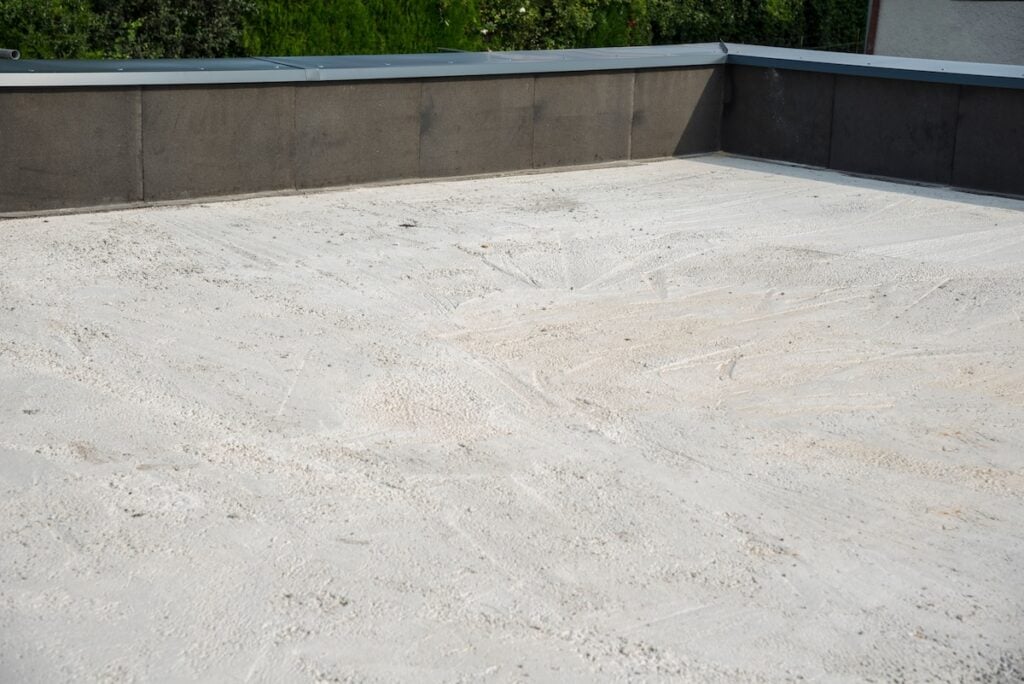
A flat roof leak can begin with something as small as a clogged drain, separated seam, membrane puncture, deteriorated flashing detail, or normal wear and tear. Finding the underlying cause early can help prevent moisture from spreading into insulation, decking, ceilings, and other parts of the property.
Shingle Masters works with flat and low-slope systems through its commercial roofing services, helping property owners determine whether timely repairs can address the problem or whether a larger roofing solution should be considered.
If you’ve noticed standing water, interior staining, or another warning sign, get your roof checked before a small leak has more time to spread.